Albrecht, Donald. Cecil Beaton: The New York Years. New York, Skira Rizzoli, 2011. [Published on the occasion of the exhibition of the same name held at the Museum of the City of New York, October 2011-March 2012.]
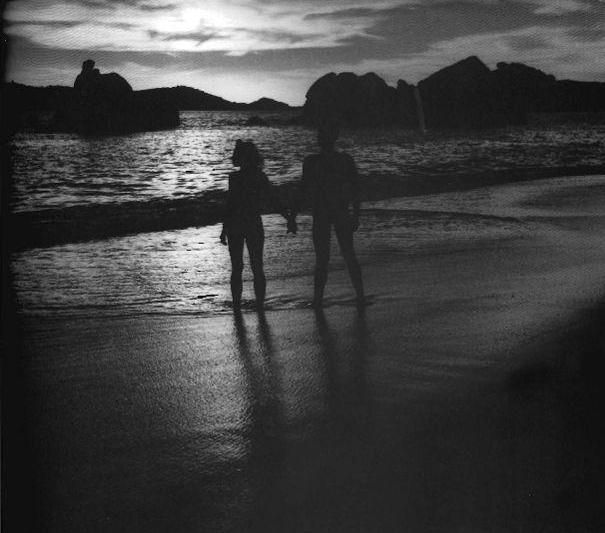
Brassaï : For the Love of Paris, Agnès de Gouvion Saint-Cyr [exhibition curator]. Paris, Flammarion, 2013. Translated from the French by David Radizinowicz. "Simultaneously published in French as Brassaï, pour l'amour de Paris" (Title page verso). [Published on the occasion of an exhibition held from November 8, 2013 to March 8, 2014 in the Salle Saint-Jean at the Hôtel de Ville in Paris].
Fashion: The Definitive History of Costume and Style. New York, DK, 2012. [‘Smithsonian’ - cover]
Jorgensen, Jay and Scoggins, Donald L. Creating the Illusion: A Fashionable History of Hollywood Costume Designers. Foreword by Ali MacGraw. Philadelphia, Running Press; Atlanta, Turner Classic Movies, [2015].
There’s the coffee table and then there’s the coffee table book. Alas, so called coffee-table books have attained a bad odor: they’re really just ornaments for display, things not really to be savored, much less read. Thus the moniker. In a word, they’re status symbols that advertise how cultured (and how well off) we are. Official sources tend to reinforce this: the term reportedly made its first appearance in a 1961 issue of Arts Magazine, and according to the Merriam-Webster Dictionary, coffee-table refers to "a large expensive book with many pictures that is typically placed on a table for people to look at in a casual way." Similarly, the august New Oxford American Dictionary, Third Edition, chimes in with the almost exact same definition: a large, expensive, lavishly illustrated book, especially one intended only for casual reading. However … I hope the four volumes listed above will to some extent refute this assumption: they have scrumptious photos but also sprightly, well informed, highly literate texts, so much so that at least one of them might be considered a full-on monograph.

As for Cecil Beaton, he was of course more than just a portrait and fashion photographer. Illustrator, artist, set and costume designer, incorrigible bon vivant, his many talents are seen to best advantage in the extravagant volume that’s Cecil Beaton: The New York Years. Fans of Beaton will lap up this book like catnip and if one is new to his work you’ll probably become a fan quickly. We have page after page of mouth-watering photos (some never before published) of the beautiful – in all senses of the word – people. I’m especially partial to the candid(?) and not-so-candid entries of Greta Garbo. Also making an appearance are the usual suspects of the rich, famous and notorious: Brando, Astaire, Warhol, Marilyn, Capote, Callas, Chanel, Mick Jagger. Indeed Beaton ran with the beau monde and, like Capote and a few others, blurred the line between self and subject.
Not so surprising then that this volume features selections from the elite figures in art, theater, fashion and the entertainment worlds from the 1930s to the 1960s. The portraits and ‘informal’ photos are fine, but what captures my heart are the illustrations of the theatrical costume designs in their technicolor glory. In his designs Beaton had an eye for the classical style and brought truth to the adage that old is always new again if we wait long enough. In sum, Cecil Beaton: The New York Years is a wonderful production and shows how classy a ‘coffee-table book’ can be.

Speaking of classy coffee table books, Fashion: The Definitive History of Costume and Style, while it may overstate its title – I’m not sure what a ‘definitive’ history would look like – this massive volume is nonetheless a feast for the senses, well, certainly for the eyes. As the fellow said, fashion changes but art and artistry doesn’t.
Impressive in its range and with impeccable production values, Fashion covers the most important trends in costume and style from antiquity to the present. True to DK form, the book scores on quality – and most definitely quantity – of illustrations; layout; and, to a certain extent, content, providing almost too many facts in one volume. Each chapter has a timeline; analysis of social, historical and cultural issues; major trends; feature articles on fashion legends and major designers; and many, many illustrations. The detailed index, even with its squint inducing small print, is also a plus, though conspicuously absent is a reading list or footnotes.
One curiosity about Fashion is that there’s no author credited, not even an editor. There are lots of names listed on the copyright page, thus we assume this production was done by committee. However – to be perfectly technical, a listing of ‘consultant authors’ and ‘writers’ is provided on pages [8-9]. In any event, and perhaps not so surprising, the writing itself, while commendable in the plethora of information it offers, has a certain generic quality and lacks a cohesive voice or point of view.
If I were to quibble, and it’s only a quibble, I would have preferred more coverage of costume design in the movies, and in particular its influence on fashion trends in the broader culture, especially during cinema’s golden age (roughly 1930-1955). Another caveat, if that is the word: the book’s content leans heavily toward women’s fashions, along with an almost total emphasis on white, American/Euro fashions that rich people wore, to the almost total exclusion of other cultures and socio/economic groups. Still, as long as there are those who appreciate the chronicling of costume design, conveyed through the most luxuriant imagery, Fashion: The Definitive History of Costume and Style will never go out of style.

Creating the Illusion then is a beguiling, somewhat incongruous combination of photos of near camp, and, in some cases, straight-on camp costumes, combined with a sensitive, knowing text that borders on the scholarly. The verdict: the book is an absolute stunner, and will delight movie fans, especially connoisseurs of classic cinema. A mild criticism: as the book's subtitle implies, the coverage is very Hollywood-centric, thus, and alas, very few, if any, foreign films are included.