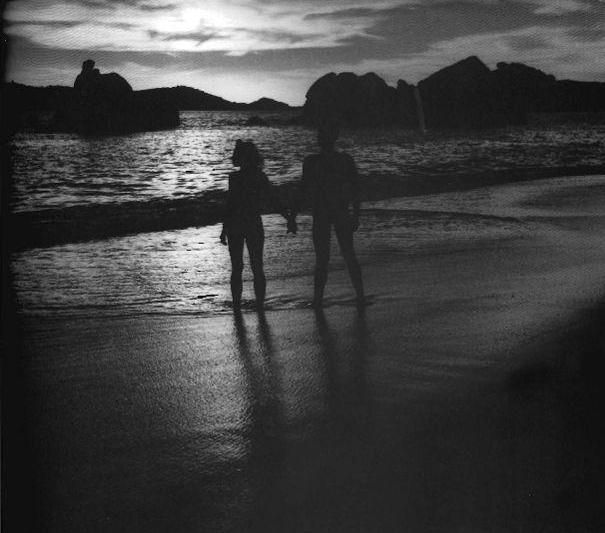
Wednesday, June 22, 2011

Return to Glennascaul

Return to Glennascaul : a story that is told in Dublin, [Royle presents a Hilton Edwards and Micheál Mac Liammóir, Dublin Gate Theatre production]. 23 minutes. Screenplay and direction by Hilton Edwards; editor, Joseph Sterling; music, Hans Gunther Stumpf. Shot on location in Dublin, 1951. With Orson Welles, Michael Laurence, Shelah Richards, Helena Hughes. Narrated by Orson Welles.

"Until the day break and the shadows flee away." Song of Solomon 2-17


I first saw Return to Glennascaul in an art movie theatre in Albuquerque about 15 years ago. It was coupled with, as I recall, The Lady from Shanghai. Later I saw it a few more times on VHS and DVD. But first, a confession: the whole thing has such a Welles look and feel that I naturally assumed he was the director, only later to learn that this was not the case, though it’s generally assumed that he had some input into Hilton Edwards’ otherwise splendid direction. In any case, I took to it immediately, especially the noir-like aspects -- voice-over narration, shadowy photography, femmes fatales [of a sort]. 


But in the end, in style and presentation anyway, it’s really an old-fashioned ghost story, notable more for its irresistibly gloomy atmosphere (love the harp music in the background!) than polish of execution. It occurs to me that it would have made a perfect segment for a Twilight Zone episode but to my knowledge it was never shown on American TV, in the 1950s anyway.
I don’t have a lot more to add regarding the substance of the film*. Kimberly Lindbergs  has penned an excellent review at CINEBEATS, and I find myself in harmony with her opinion that, for all its spookiness, Glennascaul is at heart a romance. A meditation on love and death, if you will, and a search for infinite redemption across time and space - and mortality itself - similar in spirit to films like The Ghost and Mrs. Muir and Uninvited (was the 1940s the golden age of ghost movies?). And of course the film’s Ireland pedigree conjures up memories of the Tristan and Isolde legend.


One criticism : the filmmakers seem to go out of their way to stress the story’s Irish bonafides, but all the characters [Welles excepted] speak with proper, upper-class English accents. But this is such a minor complaint for this otherwise immensely enjoyable curiosity, at once eccentric and haunting, in more ways than one.
* Should I keep referring to Glennascaul as a ‘film,’ since it only runs 23 minutes?

Monday, May 30, 2011

Changes

    Some readers might have noticed a change in this blog’s title [1]. I thought Mexico Noir for a title was a bit too narrowly focused, thus I settled on Caffè Noir, which seemed a good choice as it's a nice umbrella for various arts and cultural topics. Moreover, the phrase combines two of my favorite things, coffee and film noir, along with overtones of the whole coffee house gestalt and all its attendant associations. The process also led me to some revealing literature on the mysteries of blog titles and what makes them work, or not.

    BTW I was a little surprised to find that Caffè Noir apparently has not been used as a blog title - touch wood. In any case, as before most of the posts will be on film noir with perhaps an emphasis on Mexican films from the Golden Age. BTW2: unlike Amazon, but like Mr. Halliwell, I have a one through four-star system of rating movies. Thus: * not-so-good; ** ok; *** good/very good; **** awesomely.

    [1] There have also been some fairly significant layout/design changes, though I'm still fussing over the blog's exact look. I switch back & forth between a dark background as befits the blog's title, and a white backdrop, which is easier to read. As a compromise I may ultimately settle on some shading of gray. In either case the http address will remain the same : http://mexnoir.blogspot.com/.

Monday, March 14, 2011

Neo-torero


Not really film noir in the classic sense and much less Mexican noir, Matador is nonetheless a quirky little hitman movie containing a few pivotal scenes which actually take place in Mexico City. In fact it may not be too much of an exaggeration to say that Mexico City is the best part of the film, as the movie makes it seem such a cool place to visit, or to live in, for that matter. 
Anyway, Matador provides another cast-against-type star vehicle for Pierce Brosnan. Portraying an edgy assassin with an unkempt  appearance, Brosnan is indeed the film’s titular matador. His character is mirrored by the real-life matador in the film, but my limited (to say the least) expertise on the subject of bullfighting precludes my saying anything very insightful as to the scenes'  true-to-life accuracy. Suffice to say that to me they they seemed highly effective and authentic.
Aside : I wonder if they ever compiled a list of the best bullfighting films - a Googling of the terms as well as a glance at the Amazon listmanias reveals no such listing for matador/bullfighting films. However, there are indeed numerous compilations of best assassin movies.  Anyway, here’s my uninformed contribution as to the most likely suspects in the cinematic toreador pantheon : The Sun Also Rises, Pandora and the Flying Dutchman, Snows of Kilimanjaro, Blood and Sand.

In any case, Matador’s other strengths include the fast pacing, well-measured editing, and fine supporting cast, especially the redoubtable Philip Baker Hall as Brosnan’s suavely sinister handler. A minor criticism would be the story’s somewhat murky ending. But ultimately for me the acting of Brosnan and the colorful Mexican settings carry the day in this appetizing little slice of neo-noir [1]. 

  [1] Matador has been much reviewed, with most of the notices being favorable. My favorite is Andrew O’Hehir’s take in Salon.

[The Weinstein Company, Miramax Films, Stratus Film Company and DEJ Productions present, in association with Equity Pictures, a Furst Films/Irish Dreamtime production, in association with Arclight Films. Starring Pierce Brosnan, Greg Kinnear, Hope Davis, Philip Baker Hall, Dylan Baker, Adam Scott. Directed and written by Richard Shepard; produced by Pierce Brosnan, Beau St. Clair, Sean Furst and Bryan Furst; music by Rolfe Kent; director of photography, David Tattersall; production designer, Rob Pearson; costume designer, Catherine Thomas; film editor, Carole Kravetz-Aykanian.]

Saturday, November 13, 2010


The other Frida


Frida : naturaleza viva. Clasa Film Mundiales, S. A. 1984. Paul Leduc, director; producers, Manuel Barbachano Ponce, Dulce Kuri; writers, Paul Leduc, Jose Joaquin Blanco; photography, Ángel Goded; editor, Rafael Castanedo; production designer, Alejandro Luna. Performers : Ofelia Medina, Juan Jose Gurrola, Salvador Sanchez, Max Kerlow, Claudio Brook.


For all her ubiquitousness in pop, and sometimes high, culture [1], Frida Kahlo has only been portrayed twice in the cinema [2]. Ofelia Medina’s much less well-known but arguably superior essay [3], directed by Paul Leduc, beat its cinematic sibling to the punch by nearly two decades [4]. Thus it can be seen as a sort of proto-Fridamania work, being released, as it were, right on the cusp of the wave that was to culminate in the full-blown Frida cult(ure) of ca. 2000 and the release of the thrice-familiar Salma Hayek version.


With unarguable Mexican bonafides – in contrast to the latter work’s internationalist credentials – Frida : naturaleza viva is at first, and, perhaps second glance, a striking corrective to its splashy rival. In quintessentially art movie fashion, this Frida is essentially a memory film; it does not tell a life’s progression but rather presents stream-of-consciousness vignettes of selected moments and incidents from the artist's life. It’s all done largely through visual imagery, and to a lesser extent, music. The prowling, leisurely paced camera repeatedly views objects related to her life and work – the art, of course, but also mirrors, bottles, political memorabilia, plants, pottery, and letters. There’s not a lot of dialogue or plot exposition, and as a result the stately pacing will try the patience of all but the most determined viewer.

To be sure the Hayek version follows the same fragmentary formula but presents Frida’s life more as a story, and in a more audience friendly, i.e. faster-paced, style, all the while seducing the viewer with its superior technical razzle-dazzle. In any case, both films eschew biographical linearity and instead opt for a floating, quasi-surrealistic montage of memorable images. Indeed, truth be told, there are more similarities between the two films than differences, and it’s not too much of an exaggeration to describe the later Frida as a somewhat unwieldy remake of the prior work [5], a revised and expanded – though not necessarily improved – edition of the Leduc/Medina original, if you will.


Neither film treats with much depth Frida’s, or for that matter, Rivera's political views, though here again the critical consensus is that the Leduc does a superior job of suggesting with some texture the nature of Frida’s political thought [6]. The later Frida ignores or downplays Kahlo's socialist worldview, anti-Americanism, and physical ailments. But in fairness the Medina/Leduc interpretation also leaves out a lot of (sometimes) unpleasant details of Frida’s life : Rivera's womanizing, her divorce from Rivera and subsequent remarriage to him a year later, her drug use and drinking, Frida’s experiences outside Mexico, and her staunch support of Stalinism in her later years. In any case the irony has not been lost on commentators that the current rampant commercialization of Frida and her art is very much at odds with her decidedly Leftist politics.


Ultimately I suspect that most Mexicanists, historical purists, and a fair number of critics will side with the Medina, but - for better or worse - the Taymor-Hayek is the one that will appeal to a broader audience as the more accessible introduction to the artist and her work. In truth, there’s plenty of riches in both films. As for me, I’m fond of both, but tilt toward the Mexican take. Time indeed alters the way we see a movie, and time has been kind to Frida : naturaleza viva.

[1] The all the more frequent references in art history and travel books which describe Rivera as the husband of the famous Mexican painter Frida Kahlo underscore her status as the preeminent Mexican artistic icon. Of course not so long ago the spousal references were reversed.

[2] There are a number of documentaries as well as theatrical productions which have appeared.  Of the documentaries, my favorite is PBS’s The Life and Times of Frida Kahlo (2005). [update 8 Mar '11 : last night I was fortunate to catch on Canal 22 the excellent, regrettably little-known Yo Soy Frida, which would be my current choice as the best Frida documentary - BCS]. Among the innumerable Frida pages on the 'Net is this selective summary of Frida Kahlo films, which, alas, omits the aforementioned Yo Soy Frida.  
  I’m not a theater buff but even the most cursory Google search will reveal a number of theatrical venues; Ms. Medina in particular has revived her Frida persona in a theatrical context in recent years, for example Cada quien su Frida.


[3] The Medina/Leduc version is, happily, creeping up in critical esteem and [North of Border] audience familiarity. For a forceful argument for the earlier film as being the superior work see John Ross, Free Frida Kahlo! and Seth Fein, Frida/Frida, naturaleza viva, American Historical Review 108, no. 4 (October 2003): 1261-63. See also Andrea Kirsh’s comparison of the two films, The three fridas 1 : films and books on Frida. For a pro-Taymor/Hayek counter point of view, see Eli Bartra, John Mraz, "Las dos Fridas: History and transcultural identities," Rethinking History v9 n4 (December 2005), pp. 449-457. 


[4] The actual release date of Frida: naturaleza viva is a little vague; I’ve seen it referenced in various sources as: 1983, 1984, 1986, and 1992.

[5] Fein, p. 1261.

[6] See also: Juliet Lynd, “Art and Politics in Leduc’s Frida ; Naturaleza Viva,” Romance Languages Annual X (1999), pp. 696-702.


Thursday, September 2, 2010

Acapulco en blanco y negro


Acapulco en el sueño, por Francisco Tario; con fotografías de Lola Alvarez Bravo. Second, facsimile edition. México, D.F.: Centro Cultural Arte Contemporáneo, 1993. Originally published: México, 1951. “La primera editción de este libro acabó de imprimir el día 9 de febrero de 1951 en los talleres de la Imprenta Nuevo Mundo, Comonfort 29-B, México, D.F., con grabados de Martínez y Cruzado y bajo la dirección de Joaquín Díez Canedo.”


Acaulco noir

Acapulco has long been a favorite for filmmakers of both a cine negro and otherwise bent [1]. Indeed, two classics from the noir canon, Out of the Past and The Lady from Shanghai, were filmed at least in part in Acapulco and its surrounding areas [2]. I’ll never tire of seeing Robert Mitchum waiting in that dreary little cantina for Jane Greer to appear, and when the magic moment arrives and she walks in out of the moonlight sun [3] . . . Wow! Though Past was probably only minimally filmed in Acapulco [4], if at all, we hardly notice or care; the film’s Acapulco scenes beguile with an irresistible atmosphere of mildly sinister exoticism and anticipation which floats, gossamer-like in a hothouse of perfumed sensuousness. Little surprise then that at the end of the film Jane wanted to go back and start over.


At any rate, and in similar b&w fashion, presented in a rival medium and possessed of a noir of a different color, is Lola Alvarez Bravo’s classic Acapulco en el Sueño. My limited facility with Spanish precludes my appreciating the poetry and beauty of Francisco Tario’s accompanying text, much less commenting on it. But in any case with books like these it’s really the photography that’s the thing, and what photography!

With its haunting, shades-of-gray images, Sueño is an eclectic, unlikely paean to Acapulco’s epoca de oro -- the pre-spoiled years of the late 1940s when there was an abundance of charm and a minimum of mass tourism. It’s all there in the varying portraits of the beautiful people (in both senses of the term); slyly candid scenes of gringo tourists; fishermen at work; and most of all, vistas of pristine, natural landscapes, capturing the natural beauty of Acapulco in monochromatic splendor. The silkscreen image on the cover of the original 1951 edition was done by the famed Guatemalan painter Carlos Mérida.


See also : Elizabeth Ferrer, Lola Alvarez Bravo, N. Y., Aperture, 2006; Tario al pique.


[1] The redoubtable IMDB also cites such unlikely classics as Treasure of the Sierra Madre and Captain from Castille as deriving at least in part from Acapulco and its environs.

[2] Past has at least a few scenes which were filmed there, so credited by the aforementioned IMDB.

[3] I always want to say moonlight; it seems more romantic.

[4] Perhaps lacking Past’s poetry and atmosphere, Shanghai nonetheless has an even stronger claim to on-location status, with a significant portion of the middle of the film being comprised of several quintessentially Wellesian scenes set in craggy, windswept cliffs and hills shot at various off-kilter angles.


Thursday, August 5, 2010

Las reinas de las rumberas


Las reinas del trópico: María Antonieta Pons, Meche Barba, Amalia Aguilar, Ninón Sevilla, Rosa Carmina, by Fernando Muñoz Castillo. [México, D.F.] : Grupo Azabache, 1993. "Se termino de imprimir en julio de 1993 en Offset 70, S.A. de C.V., Victor Hugo 99, Mexico,03300, D.F."

Las reinas del trópico is a loving pictorial tribute to the five Latina actresses* in the book's subtitle, focusing on their spicy dance numbers in the rumberas (aka cabaretera) cinematic genre popular in the 1940s and 1950s. In the context of cine negro the book is also noteworthy for its many tasty and very noirish photos of the (non-cabaret) scenes from individual films. See also : Rumberas cubanas, reinas en el cine.


*
They all attained fame in Mexican films but only one of them (Meche Barba) was actually of Mexican descent
.


Sunday, May 23, 2010

Mexico and the Blacklist. Postscript : A 'Touch' of the Red Scare. Part 1

 
Despite his rather well-known liberal political views, Orson Welles was never a victim of the Blacklist [1]. Though he had already been denounced as a Communist sympathizer by the Hearst press, the official targeting of Welles was hardly necessary, given his (more or less) self-imposed Hollywood exile during the Blacklist’s peak years of 1947 to 1957. Welles’s absence during these years might have been partially due to his discomfort with the prevailing tenor of the times, but the more likely explanation was his reputation for not playing the filmmaking game by the established Hollywood rules, his supposed transgressions being, among others, extravagance and unpredictability. The result was a paucity of directorial engagements. Thus Welles’s was a political sort of blacklisting, but not of the ideological kind.


Elsewhere in this blog we’ve discussed Touch of Evil as a prime example of border-noir, in particular focusing on its border/racial issues and the complexly textured character of Capt. Quinlan. In this posting we’ll consider Touch of Evil in the context of the Red Scare of the 1950s. The film indeed reeks of a malodorous if rather unfocused malevolence [2], created and sustained by its sounds, bumpy narrative, character grotesques, sleazy music, low rent settings, and murky – even by noirish standards – look.

More specifically, Touch of Evil is about – among other things – racism and American supremacism, and the corresponding haves and have-nots on both sides of the border. But it’s also about the police, police corruption, state terror and the abuse of official power, all themes that resonate within a McCarthy-esque gestalt in the film’s context of the 1950s.

On one level Evil can be read as a Red Scare parable where Quinlan and the entire ‘Los Robles’ police apparatus stand in for HUAC/McCarthy-like forces of official heavy-handedness, where the Mexicans, small time criminals, and otherwise powerless and marginalized individuals - for whom questionable associations and even suspicion of wrongdoing were tantamount to guilt - represent the victims of the Cold War’s most egregious paranoiac excesses. The apt setting is the phantasmagoric, border town universe of Los Robles, which nicely fills in as an extreme manifestation of American society in the 1950s. “If border towns do bring out the worst in countries, perhaps, then, they are metaphors for what those countries really are.” (Krueger, p. 57).


Filmed in 1957 and released the following year, Touch of Evil is often cited as the book-ending apotheosis of the noir era [3]. It’s also fair to think of the years 1957-1959, or thereabouts, as the unofficial end of the Blacklist. The late Fifties’ more progressive bent was further evidenced by the growing momentum of the Civil Rights movement. But perhaps most important, 1957 also witnessed the passing of Sen. Joseph McCarthy, and it’s perhaps no accident that the character of Quinlan - scowling, unkempt, singularly un-photogenic - bears a strong metaphorical (and physical) resemblance to McCarthy.  
'Touch' of the Red Scare Part 2 here